
Travelers often face a decision when it comes to staying connected: should they opt for an eSIM or pick up a local SIM card from an airport kiosk?
The choice between eSIM and airport SIM cards depends on convenience, cost, and the traveler’s specific needs.
With the rise of eSIM technology, many find it easier to activate a data plan without the hassle of physical cards, while airport SIM cards offer immediate access as soon as one arrives in a new country.
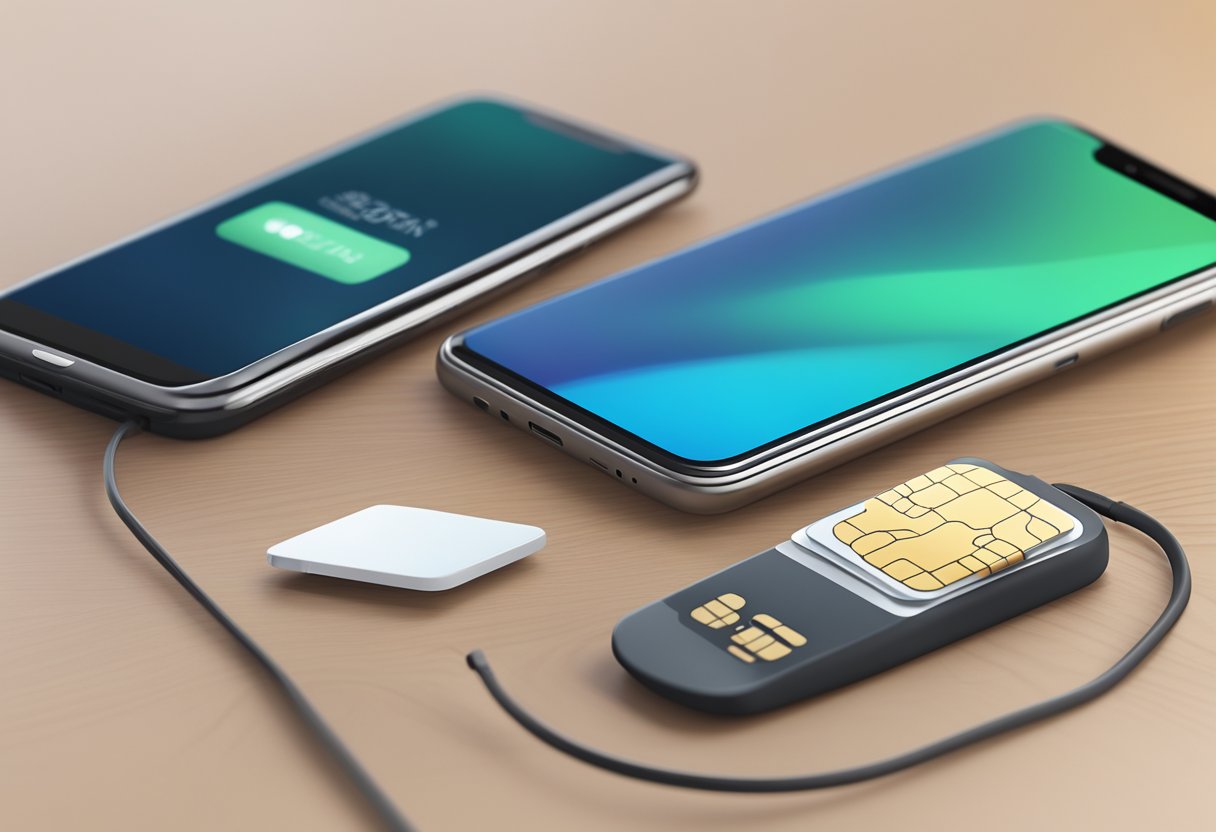
For those who prioritize flexibility, eSIMs can be managed directly on their smartphones, allowing them to switch between multiple plans without having to handle physical SIMs.
Conversely, airport SIM cards can often be purchased quickly and come with local data plans that may cater to short-term visitors better.
Understanding the advantages and disadvantages of each option is crucial for making an informed decision about connectivity while traveling. This article will explore the key differences between eSIMs and airport SIM cards to help travelers navigate the best choice for their journeys.
Understanding eSIM and Traditional SIM Cards
The evolution in mobile connectivity has led to the introduction of eSIM technology alongside traditional SIM cards. Understanding these two options is essential for consumers seeking flexibility and convenience in mobile data usage.
What Is an eSIM?
An eSIM, or embedded SIM, is a digital SIM that allows users to activate a cellular plan without needing a physical SIM card. This technology is integrated directly into a device’s chipset, making it more secure and less prone to loss or damage.
eSIMs support remote provisioning, meaning users can change carriers and plans directly through device settings.
Often, scanning a QR code provided by the carrier facilitates this process, simplifying activation while traveling internationally. This feature is particularly beneficial for digital nomads who frequently switch networks for better connectivity.
Traditional SIM Cards Explained
Traditional SIM cards, or physical SIMs, are small, removable cards inserted into a mobile device to connect to a carrier’s network. These cards store user information, including phone numbers and network settings, enabling mobile data access and voice services.
Users must physically swap SIM cards when changing carriers or plans, which can be inconvenient, especially for travelers.
Despite this, traditional SIM cards remain widely used due to their familiarity and compatibility with a broad range of devices. Most smartphones, tablets, and other mobile devices have a dedicated SIM card slot for easy installation and removal.
Comparing eSIM and Physical SIM Card Features
| Feature | eSIM | Traditional SIM |
|---|---|---|
| Portability | Built into the device | Removable and swappable |
| Activation | QR code or app-based | Physical exchange of cards |
| Security | More secure (non-removable) | Vulnerable to loss and damage |
| Carrier Switching | Instant through settings | Requires physical card change |
| Device Compatibility | Newer devices mostly | Broad compatibility |
eSIMs stand out for their ability to facilitate instant activation and switching between plans. However, traditional SIM cards are still relevant, especially for older devices and users who prefer a tangible option.
Device Compatibility and Installation Process
Compatibility varies between eSIMs and traditional SIM cards. Most modern smartphones, tablets, and wearable devices now support eSIM technology, including popular models from Apple and Samsung. Users should verify compatibility with their specific devices before selecting a plan.
Installing a traditional SIM card involves locating the SIM slot, usually on the side or back of the device, and inserting the card into the tray.
In contrast, activating an eSIM requires users to navigate device settings, scan a QR code, or utilize an app provided by the carrier for seamless installation. This installation process emphasizes the eSIM’s flexibility and ease of use, benefitting those who frequently change their mobile service.
Choosing the Best SIM Option for Travel

Selecting the right SIM card can greatly enhance the travel experience. Understanding the advantages of eSIMs, where to purchase airport SIMs, and cost comparisons will help in making an informed decision.
Advantages of eSIM for International Travelers
eSIM technology offers several compelling benefits for international travelers. One major advantage is the ease of activation. Users can simply download a data plan after arrival, eliminating the need for physical cards or visits to stores. This can be particularly convenient in countries like Japan, where language barriers might complicate a physical SIM purchase.
The flexibility of eSIM plans is also noteworthy. They often feature competitive pricing, allowing travelers to choose plans that fit their data needs without unnecessary costs.
Additionally, eSIMs support multiple profiles, enabling users to switch between local networks seamlessly.
Since eSIMs can be managed via a smartphone’s settings, travelers can adjust their settings without hassle. This means better stability in internet connection and reduced roaming charges during travels.
Where to Buy Airport SIM Cards
Airport SIM cards are commonly found in various locations within terminals. Travelers can easily purchase them at dedicated kiosks, convenience stores, or vending machines. These sales points usually cater to incoming tourists, providing a straightforward way to obtain data services.
However, prices at airports can be significantly higher than those offered through online platforms. Some travelers prefer to pre-order cards from retailers like eSIMineurope, who allows customers to select their plan beforehand. This could lead to better deals, especially for long trips.
It is also essential to consider planned travel routes. Certain airport SIMs may offer better data coverage in specific regions, ensuring consistent internet access.
Comparing Costs and Convenience
When comparing eSIMs and airport SIM cards, costs often become a deciding factor. Generally, eSIM plans can be more cost-effective when purchased in advance. Travelers can easily analyze different providers online and select a package that meets their needs.
On the other hand, airport SIM cards can be pricier but offer immediate access upon arrival. This can be crucial for those needing instant internet connectivity for navigation or communication via apps like WhatsApp.
Travelers should weigh convenience against costs. For example, if a traveler lands late at night, securing a SIM at the airport may be the only option. However, for early arrivals, pre-ordering an eSIM could provide both convenience and savings.
Accessibility and Customer Support
Accessibility of SIM cards can heavily influence a traveler’s choice. eSIMs can be activated digitally, making them accessible anytime.
Users can manage their accounts and purchase additional data plans without visiting a physical store.
In contrast, airport SIM cards might have limited customer support options, as they are often sold at kiosks with minimal staffing. This can result in challenges if a traveler encounters issues during activation or needs assistance with APN settings.
For travelers seeking stability and hassle-free service, choosing a provider with robust customer support can make a difference.
Researching options, including reviews and ratings, can help ensure a smooth experience when selecting the right SIM card for travel.